
Understanding Amazon FBA UK: Benefits and Market Landscape
What is Amazon FBA UK and How it Works
Amazon FBA UK (Fulfilment by Amazon) revolutionizes how sellers approach online business. This comprehensive logistics solution enables entrepreneurs to scale without drowning in operational details. Rather than managing warehouses, packing stations, and shipping partners, sellers can focus on building their brand and sourcing products.
The concept is beautifully simple. Sellers send their inventory directly to Amazon's UK fulfilment centres, where everything else happens automatically. Once your products arrive, Amazon takes full responsibility for storing them in their state-of-the-art warehouses, processing orders when they come in, and delivering packages to customers' doorsteps.
One of the most valuable aspects of Amazon FBA UK is the automatic inclusion in Amazon Prime. Your products gain the coveted Prime badge, unlocking access to customers who expect lightning-fast delivery. This isn't just about speed – it's about customer confidence and trust in your brand.
The process follows four straightforward steps:
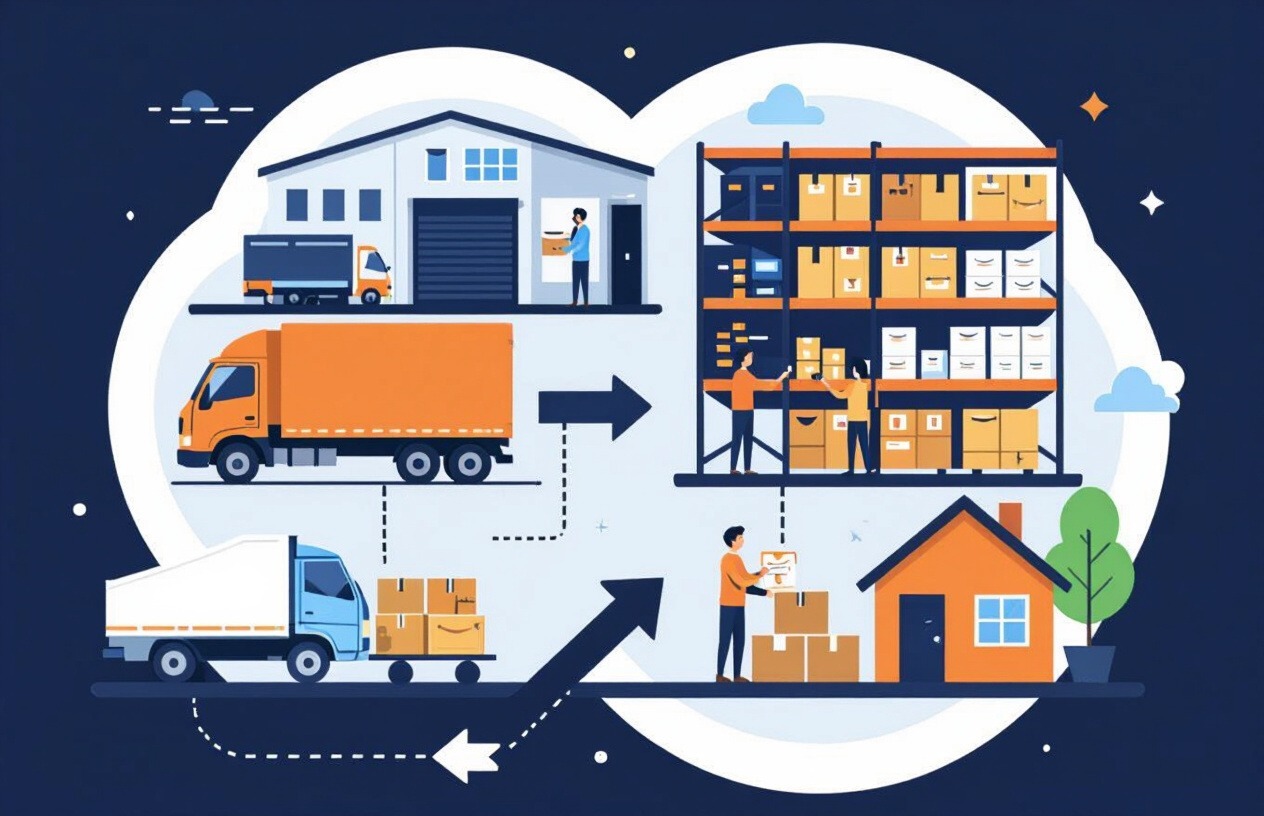
1. Source products and ship them to Amazon 2. Amazon stores your inventory in their fulfilment centres 3. When orders arrive, Amazon picks, packs, and ships your products 4. Amazon handles all customer service queries and returns
For UK entrepreneurs, this system levels the playing field. Small businesses can suddenly compete with established brands, offering the same professional service and delivery speeds that were previously impossible without massive infrastructure investment.
Amazon's Dominance and Growth in the UK Market
The numbers tell a compelling story about Amazon's market power in the UK.
.jpg)
Controlling over 30% of the online retail sector, Amazon has established itself as the undisputed leader for merchants seeking maximum visibility.
What's particularly striking is consumer behavior – more than 90% of UK shoppers turn to Amazon when they want fast, reliable delivery. This consumer trust translates into a massive opportunity for FBA sellers.
The Prime ecosystem represents another tremendous advantage. With over 15 million UK Prime members actively shopping, FBA products gain instant access to this high-spending customer base. These shoppers are not just casual browsers – they're loyal customers who shop frequently and spend more per order.
The Buy Box – that coveted "Add to Cart" button on product pages – heavily favors FBA sellers. Winning this position can dramatically increase sales volume, and Amazon's algorithm gives preference to FBA products because they guarantee delivery reliability.
Looking ahead, UK eCommerce is projected to exceed £150 billion by 2026, creating an expanding opportunity for sellers who establish themselves now.
Key Advantages for UK Sellers with FBA
The Prime advantage cannot be overstated. When your products carry the Prime badge, you instantly tap into millions of loyal UK Prime members. These customers filter their searches for Prime-eligible products and trust the Amazon brand implicitly.
Scalability represents another crucial benefit. As orders increase, Amazon FBA UK automatically scales your operation. There's no need to hire additional staff, lease larger warehouses, or develop complex logistics networks. Amazon handles everything from storage to shipping, freeing you to focus on growing your product line and marketing efforts.
Customer service can make or break an eCommerce business. With FBA, Amazon's world-class customer service team manages all inquiries and returns. This professional handling leads to higher seller ratings, fewer negative reviews, and more repeat customers.
Finally, the Buy Box advantage provides a significant competitive edge. FBA products typically have higher chances of winning this prime real estate because Amazon's algorithm favors items that can be shipped quickly and reliably. This positioning directly translates to increased sales volume and revenue growth.
Navigating the Challenges and Costs of Amazon FBA UK for Profitability
The Real Costs Involved with Amazon FBA UK
When diving into Amazon FBA UK, understanding the true costs is crucial for building a sustainable business. Many new sellers focus on product sourcing while overlooking the significant fees that can eat into profit margins.
Fulfillment fees form the backbone of the FBA model, covering picking, packing, and delivery of each order. These fees vary based on product size and weight—with heavier items incurring substantially higher costs. For instance, a standard-size item under 250g costs approximately £2.35 for fulfillment, while larger items can cost upwards of £5-10 per unit.
Storage fees fluctuate based on inventory volume and seasonality. Between January and September, standard-size items cost £0.65 per cubic foot monthly, but these rates nearly double during the October-December holiday period. Long-term storage penalties kick in for inventory older than 365 days, making inventory management critical.
Referral fees take a significant slice of your revenue—typically between 8% and 15% of the sale price depending on the category. Electronics might incur 7% fees, while jewelry could command up to 20% of your sale price.
UK sellers must also navigate VAT obligations. Once you exceed the £85,000 threshold, you'll need to register for VAT and charge 20% on applicable products, while maintaining proper accounting records and filing regular returns.
Let's break down a practical example: For a £20 item sold through Amazon FBA UK, you might pay approximately:
- £2.35 in fulfillment fees
- £0.40 in monthly storage
- £3.00 in referral fees (15%)
- £0.50 in other miscellaneous fees
This leaves you with about £13.75 before accounting for your product cost and marketing expenses.
.jpg)
Comprehensive fee breakdowns show why careful planning is essential to protect your margins.
Common Challenges and Disadvantages of FBA UK
Beyond costs, Amazon FBA UK sellers face several operational hurdles. The combined impact of storage, fulfillment, and referral fees can slash profit margins dramatically without strategic pricing. Many new sellers underestimate these costs and price products too competitively, leaving little room for profit.
Amazon's storage limitations have become increasingly restrictive, with inventory performance scores determining your allotted space. Poor-selling products face strict limits, and exceeding your allocation triggers removal fees or forces costly disposal of inventory.
The marketplace saturation presents another significant challenge. With thousands of new sellers joining monthly, standing out requires significant investment in listing optimization, professional product photography, and paid advertising campaigns. Some categories have become virtual battlegrounds where only sellers with deep marketing budgets survive.
Perhaps most daunting for new entrepreneurs is navigating UK VAT requirements. Misunderstanding tax obligations has led to account suspensions and unexpected tax bills for many sellers. Foreign sellers particularly struggle with compliance, often requiring specialized accountants familiar with both Amazon FBA UK and British tax law.
Is Amazon FBA UK Still Profitable in 2026? Strategies for Success
Despite these challenges, Amazon FBA UK remains a viable and potentially lucrative business model with the right approach. The growing base of 15+ million Prime members represents a massive pool of high-converting customers who specifically seek Prime-eligible products—a key advantage for FBA sellers.
The UK e-commerce market continues its explosive growth trajectory, projected to exceed £150 billion by 2026. This expanding marketplace creates space for new brands to establish themselves before saturation reaches its peak.
Amazon's sophisticated seller tools provide competitive advantages for data-driven entrepreneurs. Inventory management systems, automatic pricing tools, and detailed analytics help optimize operations and maximize profitability in ways impossible on other platforms.
Success in 2026's Amazon FBA UK landscape depends on strategic positioning. Winning sellers focus on:
- Identifying underserved niches with healthy margins
- Developing unique products with compelling branding
- Mastering PPC advertising and listing optimization
- Building customer loyalty through exceptional service and follow-up
Many profitable sellers leverage expert guidance and mentoring to navigate the increasingly complex Amazon ecosystem, helping them avoid costly mistakes and accelerate their learning curve.
Frequently Asked Questions (FAQs)
Is Amazon FBA UK worth it in 2026?
Yes, Amazon FBA UK is still profitable in 2026 with the right product selection and cost control.
How does Amazon FBA UK work for beginners?
Amazon FBA UK works by sending products to Amazon warehouses, where storage, shipping, returns, and customer service are handled.
What are the Amazon FBA UK costs?
Amazon FBA UK costs include fulfillment fees, storage fees, referral fees, and optional advertising charges.
Do I need VAT for Amazon FBA UK?
Yes, VAT registration is required once your UK turnover exceeds £85,000.
Is Amazon FBA UK profitable for small sellers?
Amazon FBA UK can be profitable for small sellers who focus on niche products, pricing strategy, and Prime eligibility.
What are the risks of Amazon FBA UK?
Amazon FBA UK risks include high competition, rising fees, inventory limits, and policy compliance issues.


